6-Piece Balance Stepping Stones for Kids: Play & Grow
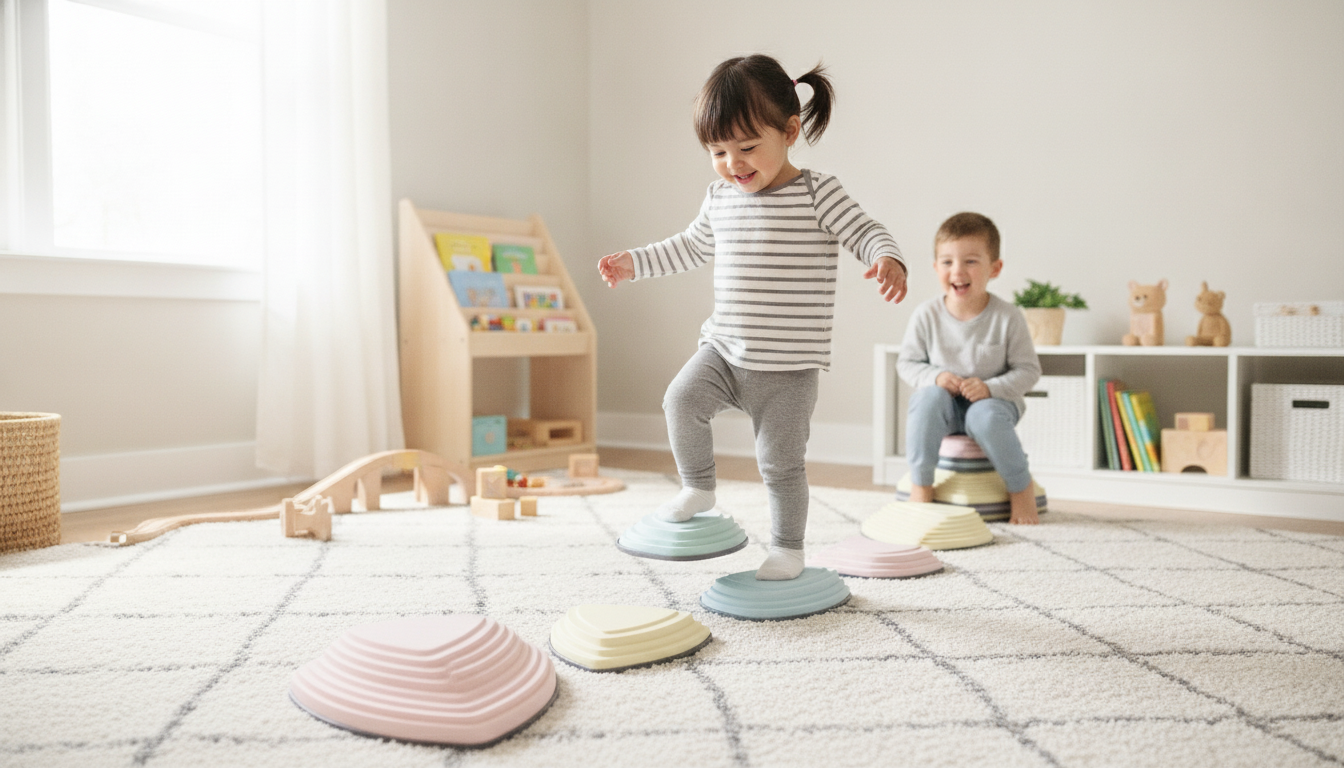
Active Play That Builds Balance, Coordination, and Confidence
Balance stepping stones turn everyday play into a repeatable movement challenge kids actually want to do again. A simple path across the living room can become a “river crossing,” a color-matching mission, or a timed loop that keeps bodies moving and brains engaged. This 6-piece set is sized for quick setups and easy resets, making it a practical option for indoor playrooms and outdoor spaces when placed on stable ground.
Active play supports healthy growth and daily movement habits—something organizations like the CDC consistently encourage for kids. Stepping stones are an approachable way to add motion without needing a big backyard or complicated gear.
What Balance Stepping Stones Help Kids Practice
- Balance and postural control through single-foot stands and controlled landings
- Coordination by switching feet, changing directions, and adjusting stride length
- Motor planning as kids decide where to step next and how far to reach
- Confidence with graduated challenges—closer spacing first, then wider gaps
- Imaginative play: “lava,” “river crossing,” treasure trails, color-based routes
These skills connect to broader developmental milestones, including how children learn to move efficiently and safely in everyday environments. For a helpful overview of child development domains, see NIH MedlinePlus.
What’s Included in the 6-Piece Set
- Six stepping stones for building short to medium obstacle paths
- Flexible setups for straight lines, zigzags, circles, and hopscotch-style patterns
- Works well as a standalone activity or as part of a playroom or backyard obstacle course
- Suitable for sibling play and simple group games with turn-taking
With six pieces, it’s easy to create a “just-right” challenge: enough variety for route-building, but not so many parts that setup feels like a project. For families who rotate toys or prefer quick cleanup, that simplicity matters.
Ways to Use Stepping Stones at Home, Indoors and Outdoors
- Indoor rainy-day circuit: place stones on a rug or play mat, then add a crawl-under chair “tunnel”
- Outdoor movement trail: mix stones with chalk arrows or cones to create stations (jump, pause, spin)
- Quiet-focus version: slow stepping with a “freeze” count at each stone to build control
- Active version: timed laps with safe spacing and clear start/finish markers
- Learning games: call out a color/number rule (e.g., step only on “odd” stones or alternate sides)
Quick Game Ideas and What They Practice
| Game | Setup | Skills Practiced |
|---|---|---|
| Lava Trail | Scatter stones with small gaps; floor is “lava” | Balance, safe landings, planning |
| Animal Steps | Assign each stone a movement (frog hop, bear step) | Coordination, strength, variety of movement |
| Freeze & Hold | Pause 3 seconds on each stone on one foot | Stability, focus, body control |
| Follow the Leader | One child builds the path; others copy | Imitation, turn-taking, sequencing |
| Color/Rule Path | Create a rule (alternate colors or sides) | Attention, patterning, motor planning |
Safety and Setup Tips for Confident Play
- Place stones on a stable, level surface; avoid uneven ground and slippery floors
- Start with shorter distances between stones; increase spacing gradually as control improves
- Keep the play zone clear of sharp corners and hard obstacles; allow a wide landing area
- Encourage “soft knees” on landings and stepping down (not jumping) for beginners
- Adult supervision is recommended, especially for younger children and group play
- Check stones periodically for wear and keep surfaces clean and dry
If kids are racing or playing in a group, add simple “traffic rules” like one-way paths, waiting on a start marker, or taking turns building the route. That keeps movement fun while reducing collisions.
Choosing the Right Stepping Stones for Different Ages
- For younger kids: prioritize stable placement, lower stepping height, and closer spacing
- For older kids: look for route flexibility—more layout options, wider spacing, and challenge games
- For small spaces: a 6-piece set can still create meaningful paths by using zigzags and circles
- For sensory-friendly play: choose predictable routes and add simple rules (pause, breathe, step)
- For multi-child households: use turn-taking games and build-a-path challenges to reduce collisions
When Stepping Stones Are a Great Fit (and When to Skip)
For families working daily movement into routines, short bursts count. Pediatric guidance emphasizes the value of regular physical activity and supportive environments; see the American Academy of Pediatrics for clinical context around activity counseling.
Product Option Available Now
If you’re ready to set up simple obstacle paths at home, 6PCS Children’s Balance Stepping Stones are available now for active play indoors or outdoors with safe placement. Use them for quick circuits, “lava” routes, or as a repeatable skill-building station kids can adjust as they improve.
For outings and playdates, packing the basics helps keep active time smooth. The Large-Capacity Multi-Function Diaper Backpack for Everyday Parenting is an in-stock option for carrying water, snacks, wipes, and extra layers—useful when the stepping-stone fun moves from the playroom to the park.
And if you like to join in on the movement games, the Women’s Color Block V-Neck Slim Fit Yoga Crop Top is available for comfortable, easy-to-move-in playtime and light workouts.
FAQ
Are balance stepping stones safe for indoor use?
Yes, when placed on a stable, non-slippery surface and the area is cleared of hard obstacles. Start with close spacing, consider using a rug or play mat for grip, and supervise younger children—especially if they’re jumping.
What age is appropriate for children’s balance stepping stones?
Many children can start when they’re steady walkers, using simple stepping (not jumping) and close spacing. Older kids can increase distance, add timed laps, and play pattern or rule-based games; individual readiness and supervision matter most.
How far apart should stepping stones be spaced?
Begin at a comfortable step distance where your child can land with control, then increase the gap gradually as balance improves. Adjust spacing based on the child’s height and whether the activity is careful stepping or jumping.









Leave a comment