12-Inch Deep Nonstick Saute Pan w/ Lid (5.5 Qt)
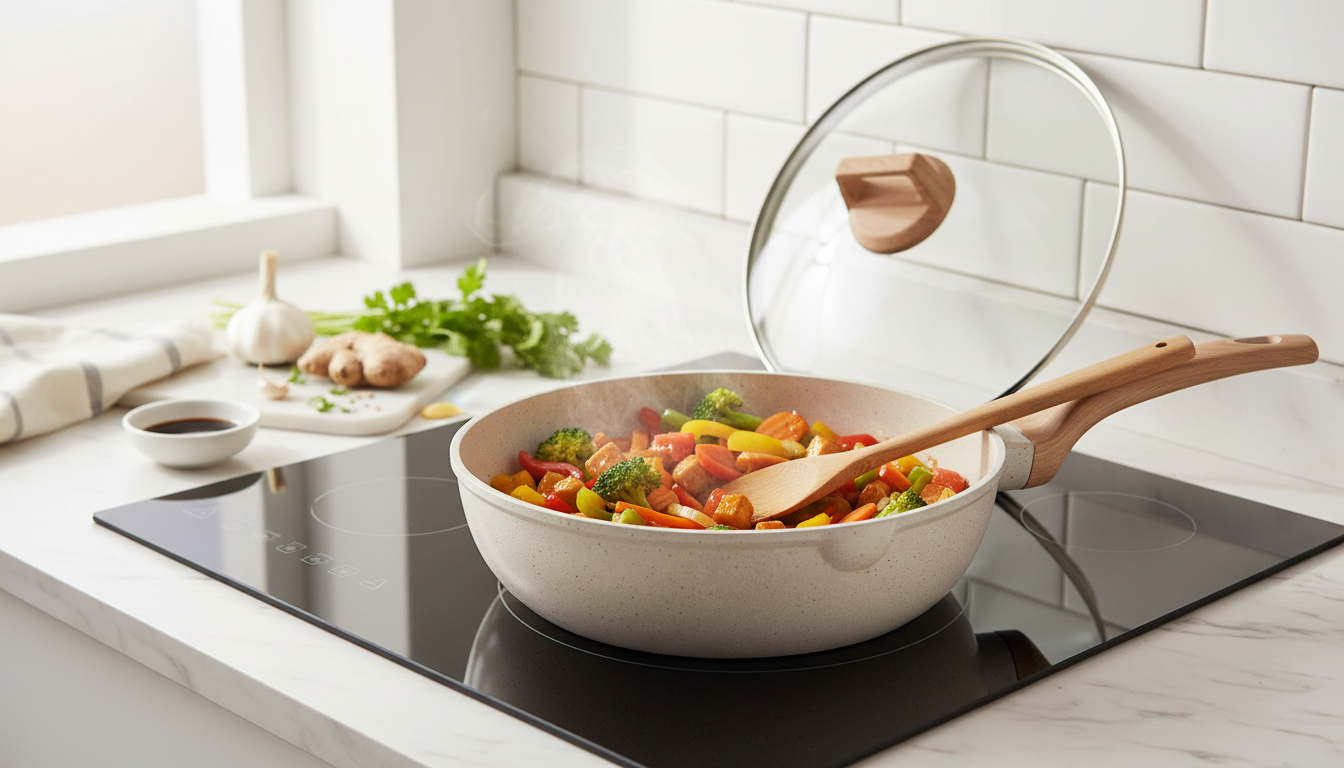
12-Inch Nonstick Deep Frying Pan with Lid (5.5 Qt): Everyday Jumbo Sautéing, Braising, and Shallow Frying
A deep, wide pan can replace multiple pieces of cookware when it has enough capacity for family meals, a reliable nonstick surface, and a lid for finishing dishes with gentle heat. This 12-inch, 5.5-quart jumbo sauté pan is built for weeknight versatility—searing, simmering, and serving—while keeping cleanup simple.
What a 12-inch, 5.5-quart deep frying pan is best for
A deep frying pan (often called a jumbo sauté pan) bridges the gap between a skillet and a Dutch oven. The wider base promotes browning, while the taller sidewalls make it easier to cook saucy recipes, reduce splatter, and toss food without sending it over the edge.
- Shallow-frying cutlets, fritters, and crispy tofu with higher sidewalls to reduce splatter
- Sautéing large batches of vegetables, stir-fries, and pasta tosses without crowding
- One-pan meals that start with browning and finish covered to tenderize (chicken thighs, sausage and peppers, etc.)
- Braising and simmering with a lid: sauces, curries, and quick stews
- Cooking for 3–6 people with room to stir and flip
Quick capacity guide for a 5.5-quart jumbo sauté pan
| Dish type | Typical batch size | Why the deep sides help |
|---|---|---|
| Shallow frying | 4–6 cutlets or fillets (depending on thickness) | More oil depth control and less spillover when turning |
| Pasta finish in sauce | 12–16 oz pasta plus sauce and mix-ins | Extra volume for tossing without sloshing |
| One-pan chicken and veggies | 6–8 thighs with aromatics | Space for browning, then lidding to finish evenly |
| Stir-fry | 6–8 cups vegetables + protein | Room to move food for better contact with the hot surface |
| Simmered sauce | Up to ~2–3 quarts liquid | Higher walls reduce boil-over and splatter |
Key features that matter in daily cooking
- Nonstick interior: Supports lower-oil cooking and easy release for eggs, fish, and sticky sauces—especially useful when cooking delicate proteins that can tear on stainless steel.
- Deep profile: Helps contain splatter, supports saucier recipes, and prevents overcrowding when you’re cooking in bigger volumes.
- 12-inch cooking surface: Better searing potential compared with smaller skillets because more food can brown at once (instead of steaming in a crowded pan).
- Lid included: Improves moisture retention for finishing proteins, softening vegetables, and keeping food warm while you plate sides or set the table.
- PFOA-free construction: Aligns with modern nonstick manufacturing standards for consumer cookware; for broader context on PFAS, see the EPA overview and the FDA information page.
How to cook with a deep nonstick pan (without damaging the coating)
A nonstick pan earns its keep when it’s treated like a precision tool. A few habits help maintain slick performance and consistent browning.
- Preheat gently: Use low-to-medium heat, then add oil; avoid empty-pan high heat spikes that can stress the coating and create hot spots.
- Use the right utensils: Silicone, nylon, or wood reduces scratch risk—especially when stirring thick sauces or scraping up browned bits.
- Let food release naturally: Proteins often unstick once they develop a sear. If chicken or fish is clinging, give it another 30–60 seconds before trying again.
- Skip aerosol sprays: These can leave a stubborn residue over time; a small drizzle of oil or a pat of butter is easier to manage.
- Control steam with the lid: For high-foam sauces (cream, starchy pasta water), keep the lid slightly ajar to reduce boil-over while still containing splatter.
Care and cleaning for longer nonstick performance
- Cool before washing: Let the pan return toward room temperature to reduce thermal shock and warping risk.
- Hand-wash when possible: A soft sponge and mild dish soap preserve the finish better than abrasive pads or harsh scouring powders.
- Lift residue instead of scraping: For stuck-on spots, soak briefly in warm soapy water, then wipe clean.
- Store thoughtfully: Dry fully before stacking; place a soft liner or towel between pans to prevent scuffs.
- Know when to replace: If the coating is visibly peeling or deeply scratched, it’s time to retire the pan for food use.
Choosing the right lid and size for your stovetop
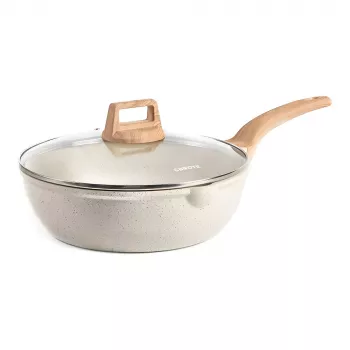
Product snapshot: 12-inch nonstick deep frying pan with lid (5.5 qt)
12-Inch Nonstick Deep Frying Pan with Lid, 5.5 Qt Jumbo Saute Pan, PFOA-Free
More in-stock picks worth a look
- Women’s Color Block V-Neck Slim Fit Yoga Crop Top
- Pet Deshedding Brush for Cats & Dogs – Removes Loose Hair & Tangles
- Large-Capacity Multi-Function Diaper Backpack for Everyday Parenting
FAQ
Can a deep nonstick frying pan be used for shallow frying?
Yes. Use a stable oil depth, keep heat at medium to control splatter, and avoid overheating an empty pan. Deep sidewalls help reduce mess while turning food.
Is PFOA-free nonstick cookware safer?
PFOA is no longer used in modern nonstick manufacturing for consumer cookware. Follow the maker’s heat and care guidelines to reduce fumes and extend coating life; the American Cancer Society’s PFAS overview is a helpful reference for general context.
How do you keep food from sticking in a nonstick sauté pan?
Preheat gently, add a small amount of oil, avoid high heat, and let proteins release naturally before flipping. Use non-metal utensils to protect the surface.








Leave a comment