Low Twin-Over-Twin Bunk Bed: Ladder & Guardrail Safety
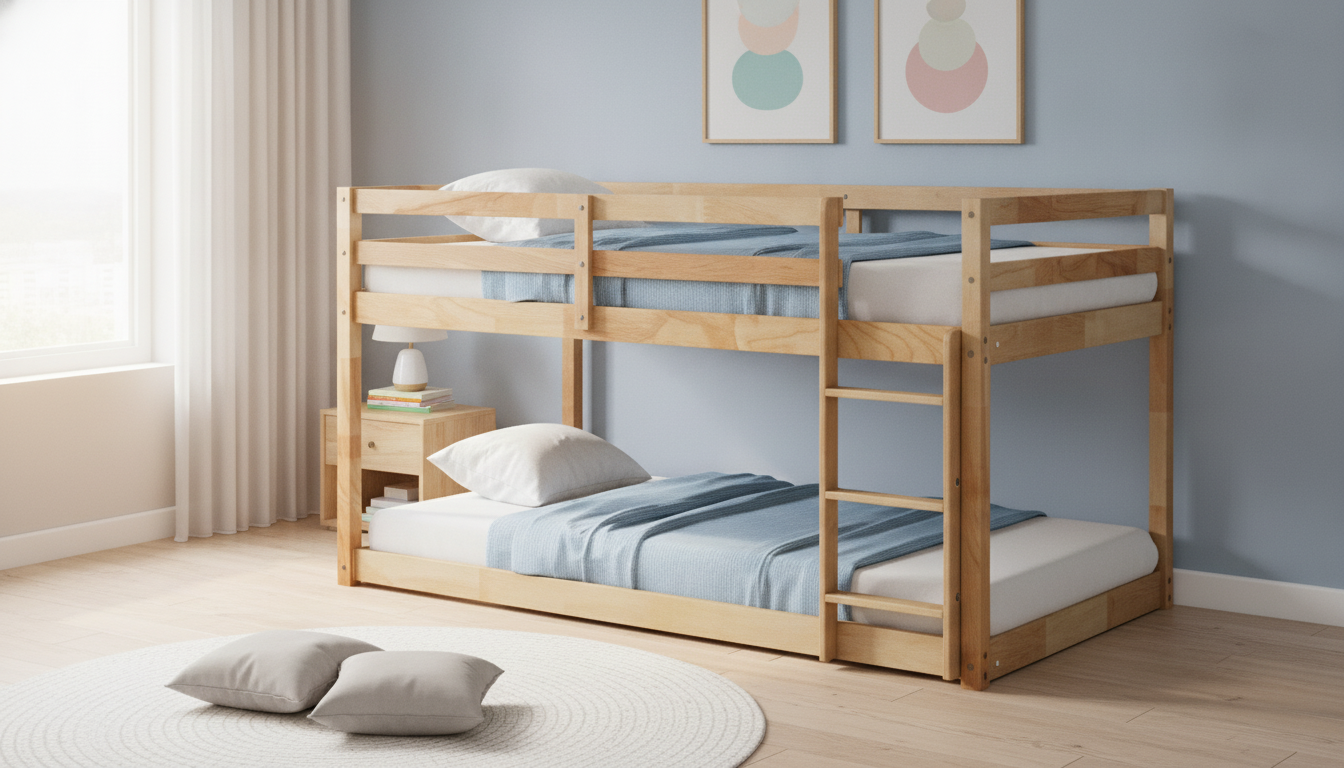
Twin Over Twin Low Bunk Bed with Ladder and Guardrails for Kids
A low-profile twin-over-twin bunk bed can open up floor space while keeping sleep surfaces closer to the ground. This style is often chosen for kids’ rooms where safer access, simpler bed-making, and flexible layouts matter just as much as maximizing sleeping capacity. With the right guardrails, ladder design, and a smart room plan, a low bunk can feel like a comfortable “big kid” upgrade without the towering height of standard bunks.
What Makes a Low Bunk Bed Different
“Low bunk” typically refers to a bunk bed with a shorter overall height and a top bunk that sits closer to the floor than traditional models. That small change can make a big difference in everyday use.
- Lower top-bunk height: Helps reduce the perceived risk of climbing and can feel more comfortable for younger sleepers transitioning to a top bunk.
- Easier access for adults: Bedtime routines, sheet changes, and nighttime check-ins are simpler when the top mattress isn’t as high.
- Better fit for low-clearance rooms: Works well with lower ceilings, ceiling fans, or attic-style slopes where vertical space is limited.
- Flexible space underneath: Depending on the frame design, you may be able to use under-bed storage bins or keep an open area for play.
Safety Features to Look For (Guardrails, Ladder, and Spacing)
Safety comes down to a combination of design, correct mattress pairing, and ongoing checks. It’s also worth reviewing current guidance and standards from sources like the U.S. Consumer Product Safety Commission and ASTM International.
- Guardrails: Choose a top bunk with full-length guardrails and a stable attachment method. Rails should stay secure over time, so plan to tighten hardware periodically.
- Mattress fit: Use the recommended mattress thickness so the top mattress doesn’t sit too high above the guardrail line, which can reduce the guardrail’s protective height.
- Ladder design: Prioritize wide, grippy steps and a fixed ladder position that fits your room layout. A ladder should feel firm under load—no wobble or shifting.
- Gap and opening checks: Confirm that openings aren’t large enough for a child’s head or body to get trapped. Follow all manufacturer warnings and assembly steps exactly.
- Age guidance: Many safety organizations advise that children under 6 should not sleep on the top bunk; families can also reference kid safety guidance through HealthyChildren.org.
Room Fit and Layout Planning
A bunk bed can make a room feel bigger—if it’s positioned well. Before ordering, measure with real-life use in mind, not just whether the frame fits against a wall.
- Measure clearances: Confirm space for the ladder entry point, a nightstand (if needed), and a safe walking path around the bed.
- Check ceiling height: Measure from the top bunk mattress surface to the ceiling and leave comfortable headroom for sitting up and climbing in and out.
- Mind windows and hazards: Avoid placing bunks near blinds cords, heaters, or awkward outlets where chargers could become a trip hazard.
- Plan lighting: A small, low-glare night light near the ladder helps reduce nighttime slips without fully waking the room.
- Reduce noise and vibration: Bunks can amplify movement; a soft rug and felt pads (where appropriate) can reduce vibration on hard floors.
Materials, Build, and Long-Term Durability
Kids use furniture hard—climbing, bouncing, leaning, and pulling. A stable bunk bed should feel solid day one and remain that way with routine care.
Quick Comparison Checklist
| Item to Confirm | Why It Matters | What to Check |
|---|---|---|
| Top-bunk guardrails | Helps reduce fall risk | Full-length rails; secure fastening; no loose sections |
| Mattress thickness | Maintains effective guardrail height | Follow the manufacturer maximum thickness guidance |
| Ladder stability | Safer climbing up/down | Wide steps; firm attachment; no wobble when weight is applied |
| Room clearance | Improves access and safety | Space to climb, walk, and make beds without crowding |
| Age appropriateness | Aligns with common safety guidance | Avoid top bunk for children under 6; follow product warnings |
Setup, Use, and Care Tips
Product Spotlight
If a compact footprint and a less-tall feel are top priorities, Twin Over Twin Low Bunk Bed with Ladder and Guardrails for Kids offers a twin-over-twin configuration designed for shared rooms and sleepovers with a lower overall profile. It includes an integrated ladder and guardrails intended to support safer access and top-bunk security when used with recommended mattress specifications.
For families juggling bedtime routines away from home, it can also help to keep essentials organized and ready to grab—especially during overnights. The Large-Capacity Multi-Function Diaper Backpack for Everyday Parenting is a practical add-on for caregivers who want a dedicated, easy-to-carry place for wipes, pajamas, and other daily necessities.
FAQ
What age is appropriate for the top bunk?
Common safety guidance advises that children under 6 should not sleep on the top bunk. Always follow the product’s specific warnings and weight limits for your model.
Do guardrails work with any mattress?
No—mattress thickness affects how much guardrail height remains above the mattress. Use the recommended maximum thickness so the mattress doesn’t sit too high and reduce the guardrail’s effectiveness.
How often should the ladder and bolts be checked?
Re-tighten hardware after the first week of use, then check about monthly for loosening, wobble, or squeaks. Regular checks help keep the frame stable as the bed is climbed on and used daily.









Leave a comment