Yard Drain Tile Guide: Slope, Trench, Pipe, Outlet
How to tile a yard for drainage?
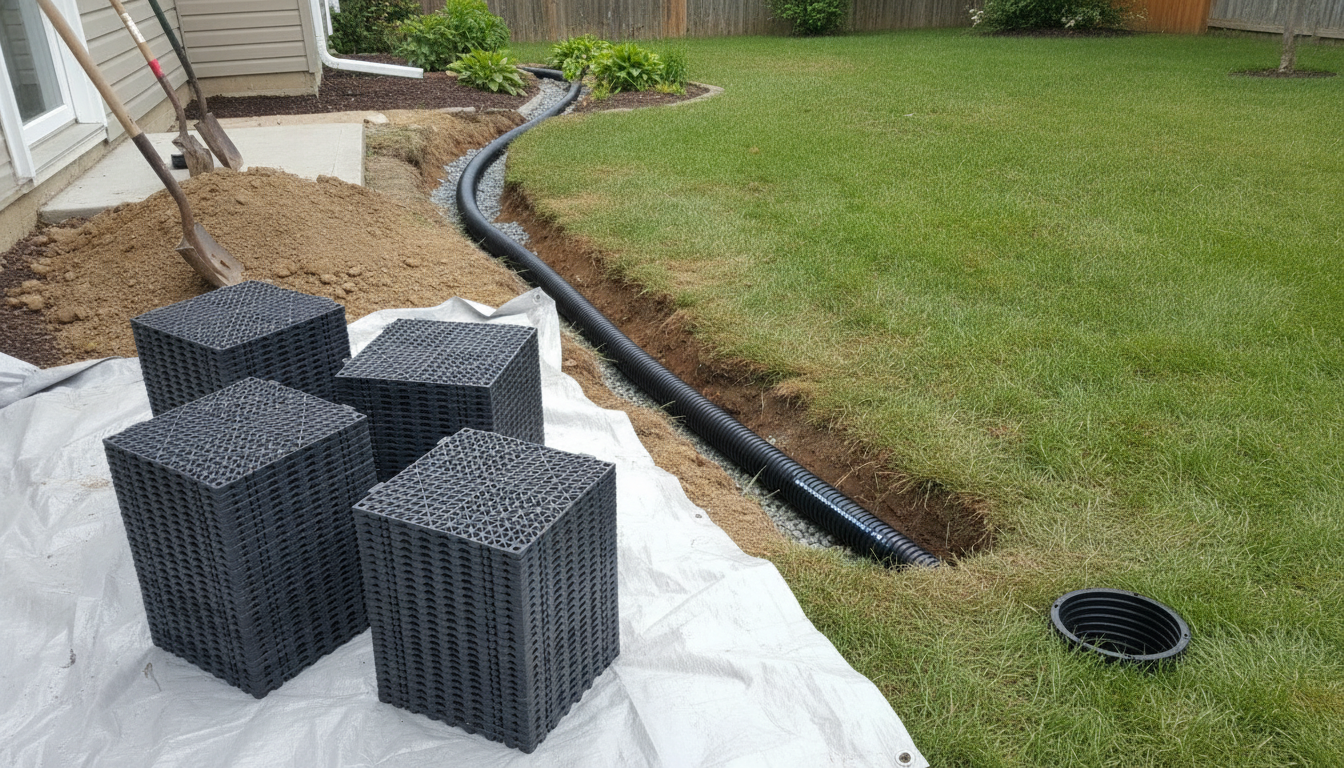
Tiling a yard for drainage usually means installing a “tile” system—perforated drain pipe set in gravel (often called a French drain or drain tile)—to move water away from soggy areas, foundations, or hardscapes. The goal is to create a sloped pathway underground so water enters the pipe, flows by gravity, and exits at a safe discharge point.
1) Plan the water’s route before you dig
Start by identifying where water collects and where it can legally and safely go: a dry well, a pop-up emitter in a lower area of the yard, a drainage ditch, or a storm drain connection (where permitted). Mark a route that avoids tree roots, utilities, and nearby structures. Call 811 to locate underground lines.
2) Set the slope for dependable flow
A consistent downhill pitch is the difference between a working drain and a buried puddle. Aim for about 1% slope (roughly 1 inch of drop per 8 feet) when possible. Use a line level, laser level, or a long straight board with a level to confirm fall along the trench.
3) Dig the trench to the right size
Typical trenches are 8–12 inches wide and 18–24 inches deep, depending on how much water you’re handling and how you plan to discharge it. Make the bottom smooth and maintain the slope the entire way to prevent low spots.
4) Add fabric, gravel, and perforated pipe
Line the trench with non-woven landscape fabric to keep soil from clogging the gravel. Add a base layer of clean, washed drainage gravel, then lay the perforated pipe with the holes facing down or at the 4 and 8 o’clock positions (follow the pipe manufacturer’s guidance). Cover the pipe with more gravel, wrap the fabric over the top like a burrito, then backfill with soil or sod.
5) Finish the outlet correctly
Use a solid (non-perforated) pipe for the last stretch to the outlet so water doesn’t leak out early. Protect the discharge point with a grate or pop-up emitter and ensure it won’t erode soil or flood a neighbor.
For a more detailed walkthrough, materials list, and layout tips, see the main guide: https://winningcatchmarket.shop/how-to-tile-a-yard-for-drainage/.
FAQ
What type of gravel should I use for yard drainage tile?
Use clean, washed angular drainage stone (often 3/4-inch). Avoid pea gravel or dirty stone, which can compact and clog more easily.









Leave a comment