Wireless RC Cars Explained: Signals, ESC, and Steering
How do wireless remote control cars work?
Wireless remote control (RC) cars work by sending radio signals from a handheld transmitter to a receiver inside the car. When the receiver detects those signals, it tells the car’s electronics how to drive the motor (for speed) and how to position the steering mechanism (for turning). The result is real-time control from a distance without a physical cable.
The basic signal path: transmitter to receiver
The controller (transmitter) converts your trigger and steering inputs into encoded commands. Most modern RC cars use 2.4GHz radio, which helps reduce interference and allows multiple cars to run nearby without constantly crossing signals. Inside the car, the receiver “pairs” (binds) to the transmitter so it listens only to that controller’s unique code.
What happens inside the car when you press the throttle
The receiver passes throttle commands to an electronic speed controller (ESC). The ESC regulates how much power from the battery reaches the motor. In a brushed setup, it modulates current to a brushed motor; in a brushless setup, it rapidly switches power phases to a brushless motor for higher efficiency and speed. Smoother acceleration comes from the ESC ramping power rather than dumping full voltage instantly.
How steering works
Steering commands go from the receiver to a servo—an actuator that rotates to a precise angle. The servo moves a linkage connected to the front wheels, turning them left or right. Because the servo is position-controlled, steering can be proportional (small input equals a small turn) instead of just “left/right.”
Range, interference, and why some cars feel more responsive
Range depends on transmitter power, antenna design, surrounding obstacles, and radio noise. Responsiveness (often called “latency”) is influenced by the radio protocol, receiver quality, and how quickly the ESC and servo react. Keeping batteries charged and antenna wires undamaged also helps maintain consistent control.
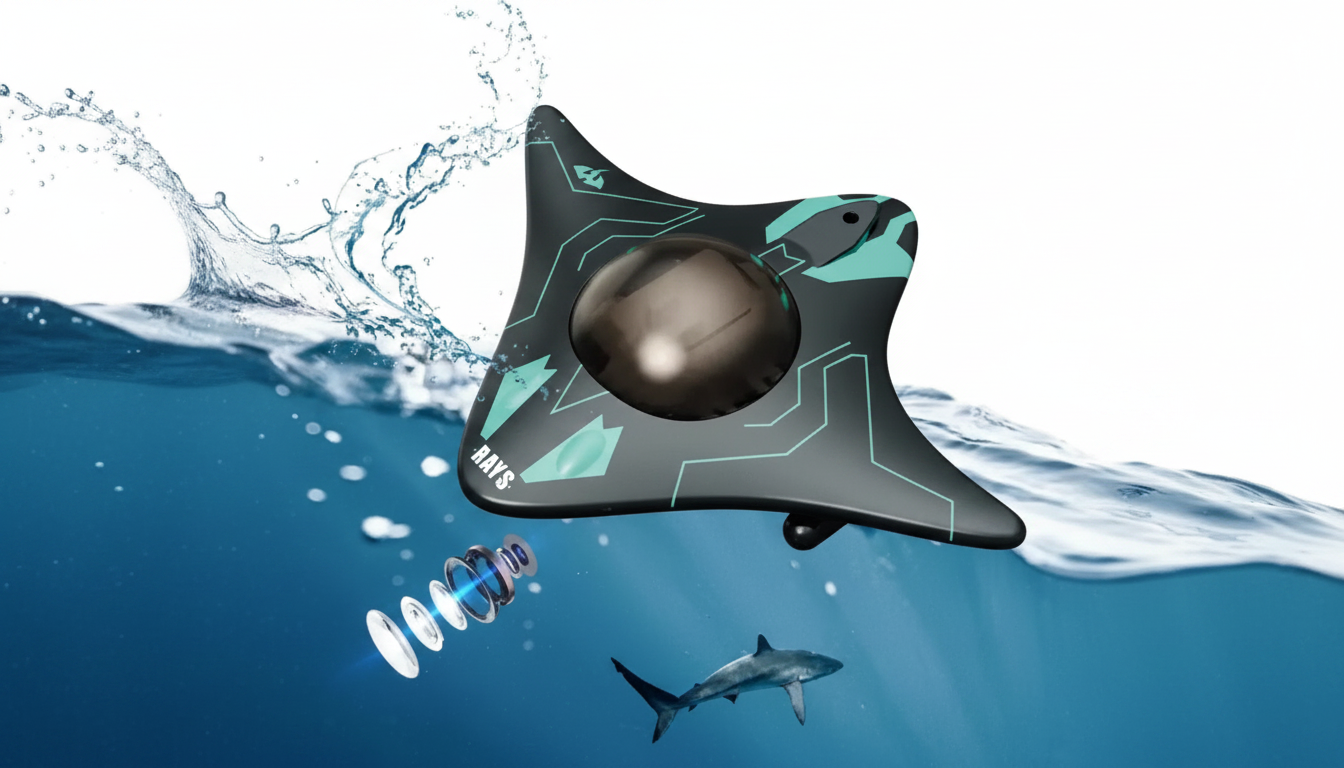
For a practical look at compact wireless control in a different setting—where remote signals manage live viewing and movement—see this guide: https://winningcatchmarket.shop/guide-mini-wifi-underwater-camera-boat-live-view-remote/.
FAQ
What’s the difference between 27MHz/49MHz and 2.4GHz RC controllers?
27MHz/49MHz systems typically use fixed channels and are more prone to interference if another device is on the same frequency. 2.4GHz systems use digital pairing and frequency hopping, making them more reliable and easier for multiple drivers to use at once.








Leave a comment